Zurück
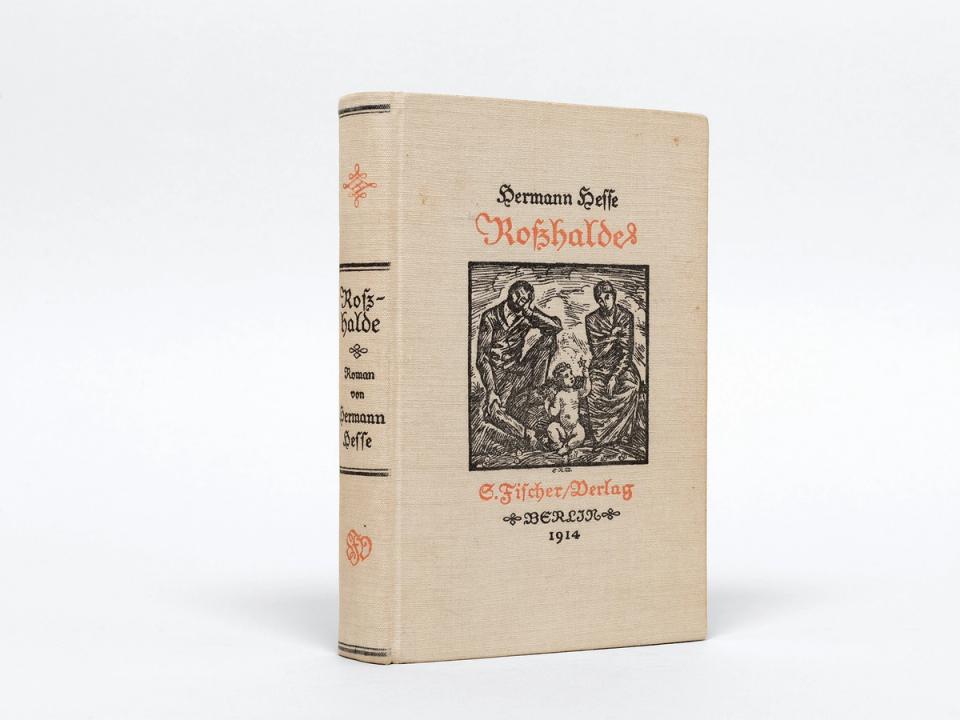
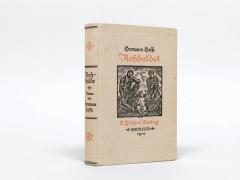
  • First edition 1914 Hermann Hesse Rosshalde hardcover book in beige cloth with woodcut illustration and red Fraktur lettering, S. Fischer Berlin.
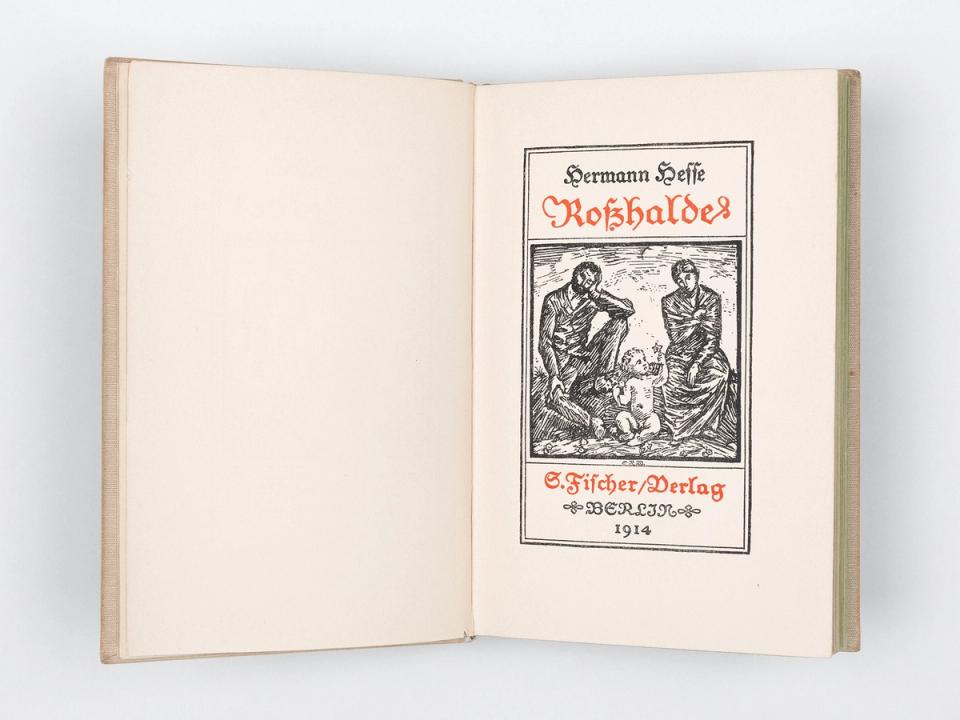
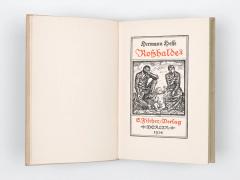
  • Title page of 1914 first edition Hermann Hesse Rosshalde showing framed black woodcut family illustration and red Fraktur text, S. Fischer Berlin.
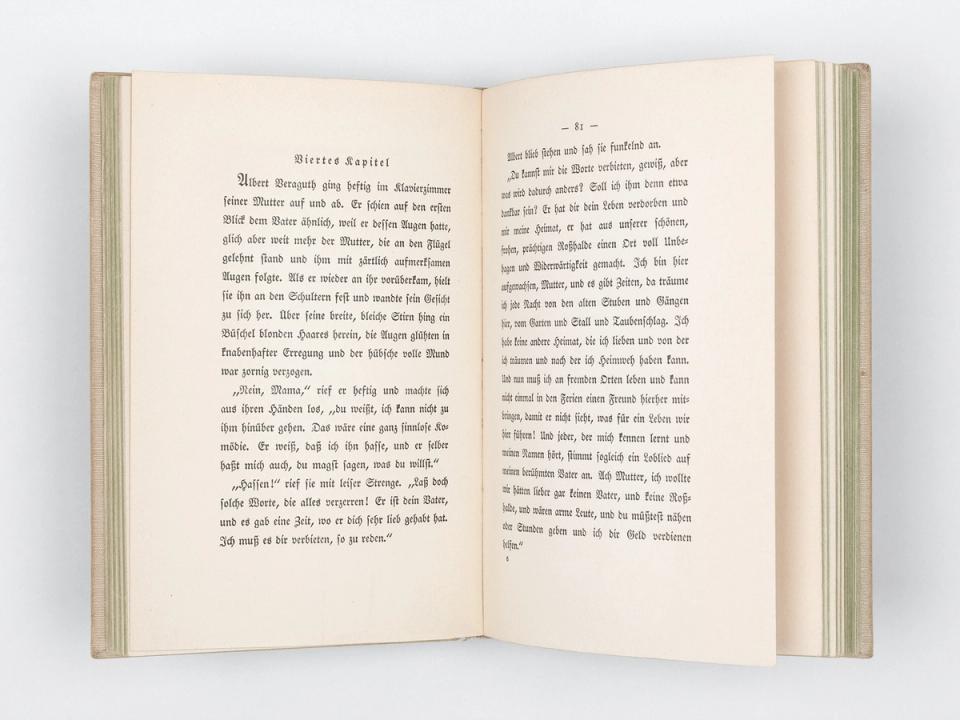
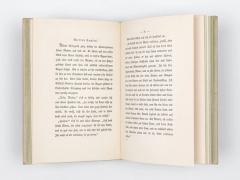
  • Open pages of 1914 first edition Hermann Hesse Rosshalde displaying German Fraktur typography at Viertes Kapitel on page 81, S. Fischer Berlin.
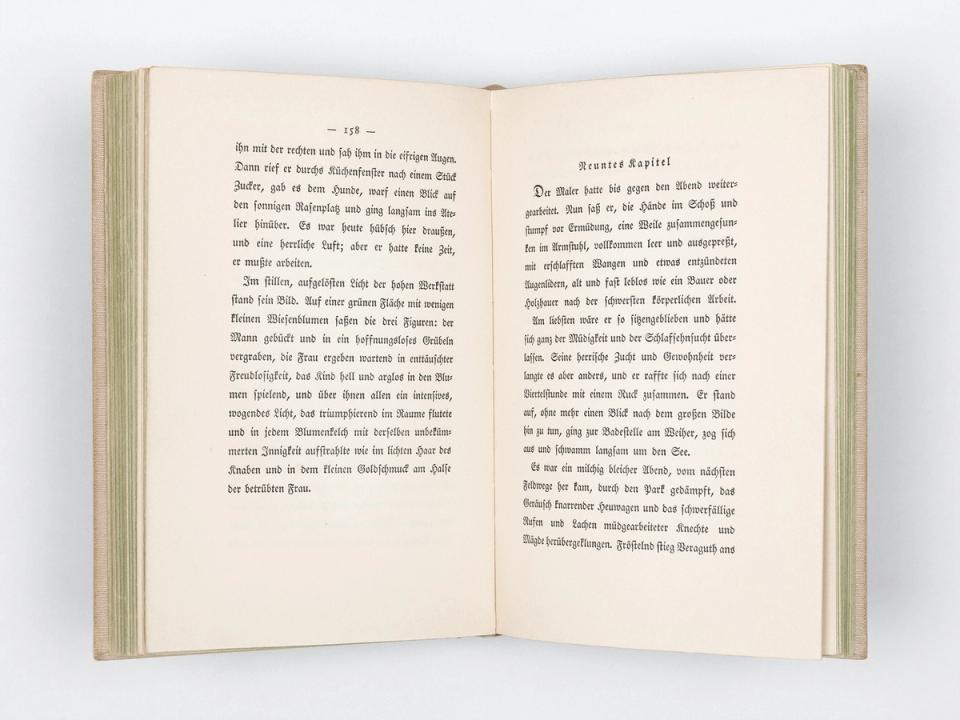
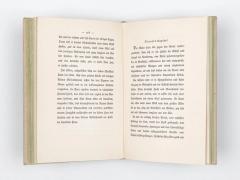
  • Interior spread of 1914 first edition Hermann Hesse Rosshalde showing German Fraktur text at Neuntes Kapitel on page 158, S. Fischer Berlin.
First edition 1914 Hermann Hesse Rosshalde hardcover book in beige cloth with woodcut illustration and red Fraktur lettering, S. Fischer Berlin.
Title page of 1914 first edition Hermann Hesse Rosshalde showing framed black woodcut family illustration and red Fraktur text, S. Fischer Berlin.
Open pages of 1914 first edition Hermann Hesse Rosshalde displaying German Fraktur typography at Viertes Kapitel on page 81, S. Fischer Berlin.
Interior spread of 1914 first edition Hermann Hesse Rosshalde showing German Fraktur text at Neuntes Kapitel on page 158, S. Fischer Berlin.

Hesse, Hermann

Rosshalde

S. Fischer, Berlin, 1914

CHF 60.–

Eine psychologische Reise vom Zerfall zur künstlerischen Wiedergeburt. Erste Auflage.

Beschreibung: Original-Leinen, Vorderdeckel mit schwarz und rot geprägtem Titel und einer in schwarz geprägten Illustration von E. R. Weiß, Rückentitel schwarz geprägt mit Ornamenten in rot. Oktavband: 19 × 13 cm; pp. 304, [4 Bl., Verlagsanzeige]. Die Titelseite mit einem Holzschnitt von Emil Rudolf Weiß (wiederholt auf dem Vorderdeckel), ausgestattet mit silberfarbenem Lesebändchen. Dreiseitiger, grüner Farbschnitt.

Ref.: Wilpert/Gühring (1992), 40

Zustand: Der Einband leicht staubrandig, vereinzelt leicht fleckig, vorderes Innengelenk eingerissen. Vorsätze und Buchblock in sehr gutem Zustand. Ein sauberes, sehr gut erhaltenes Exemplar.

---

Literatur:
Wilpert, G. von; Gühring A.: Erstausgaben Deutscher Dichtung. Alfred Kröner, Stuttgart, 1992