Münster, Sebastian
Cosmographia, das ist: Beschreibung der gantzen Welt (…)
Henricpetri, Basel, 1628
The Book of the Whole World: Sebastian Münster’s Monumental Cosmographia of 1628.
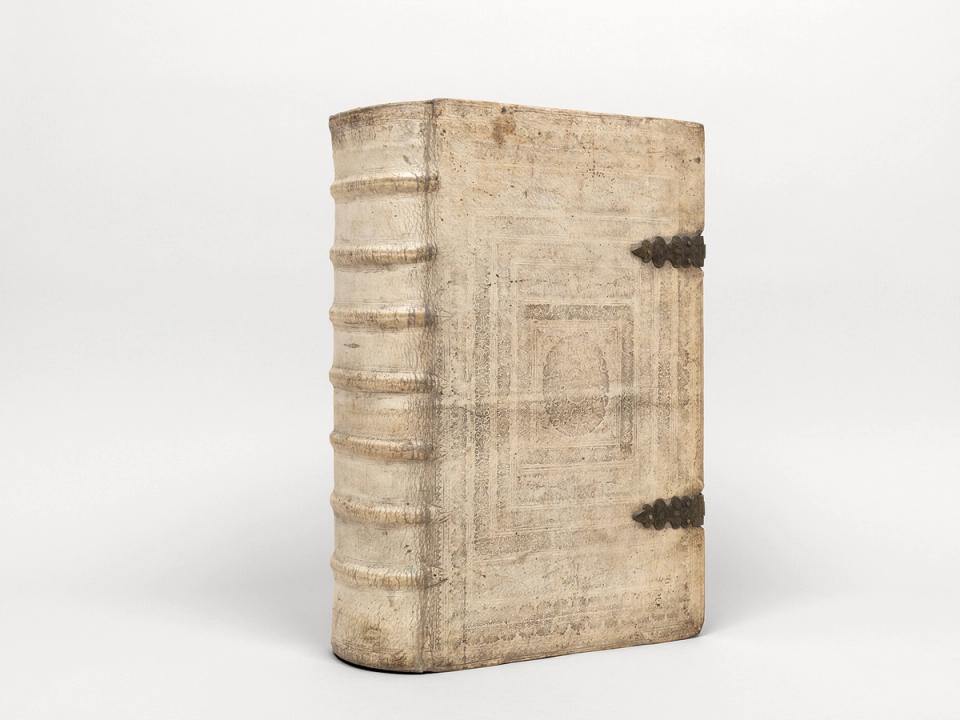
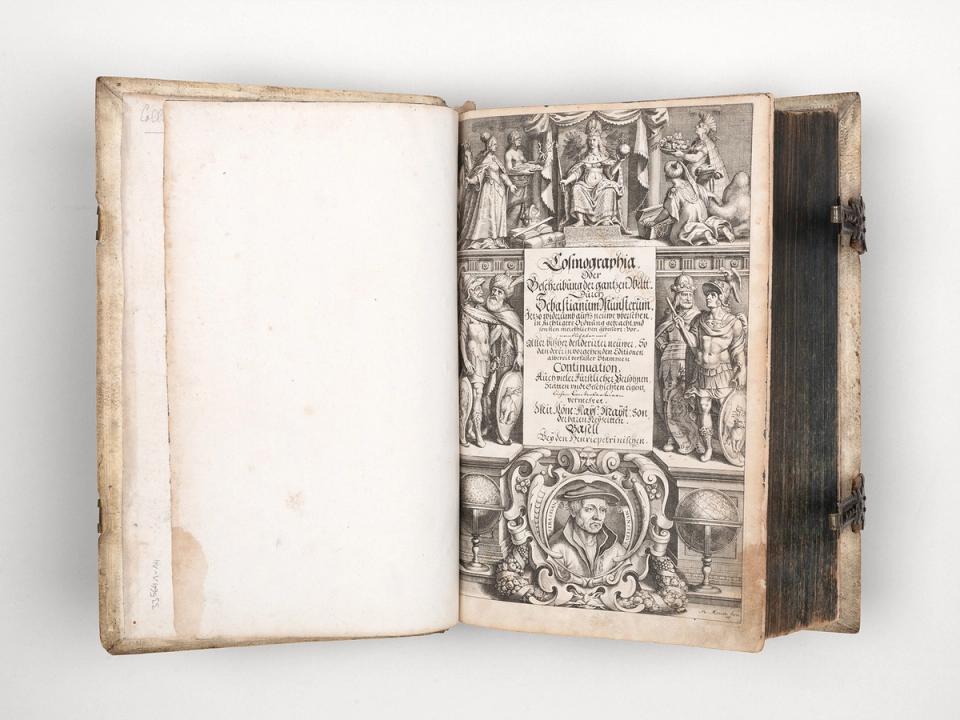
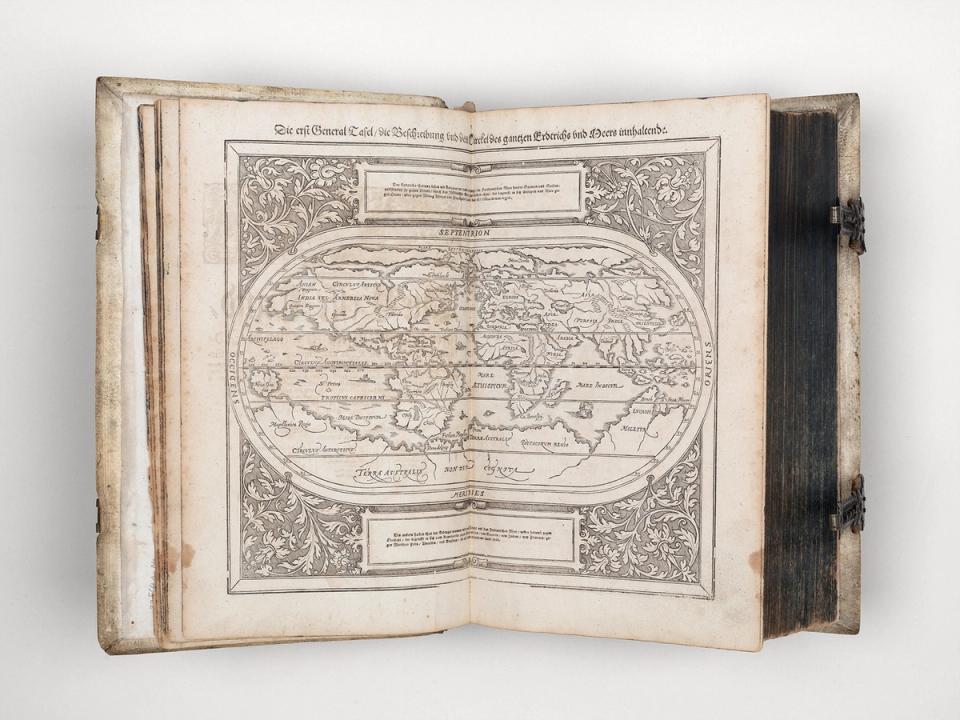
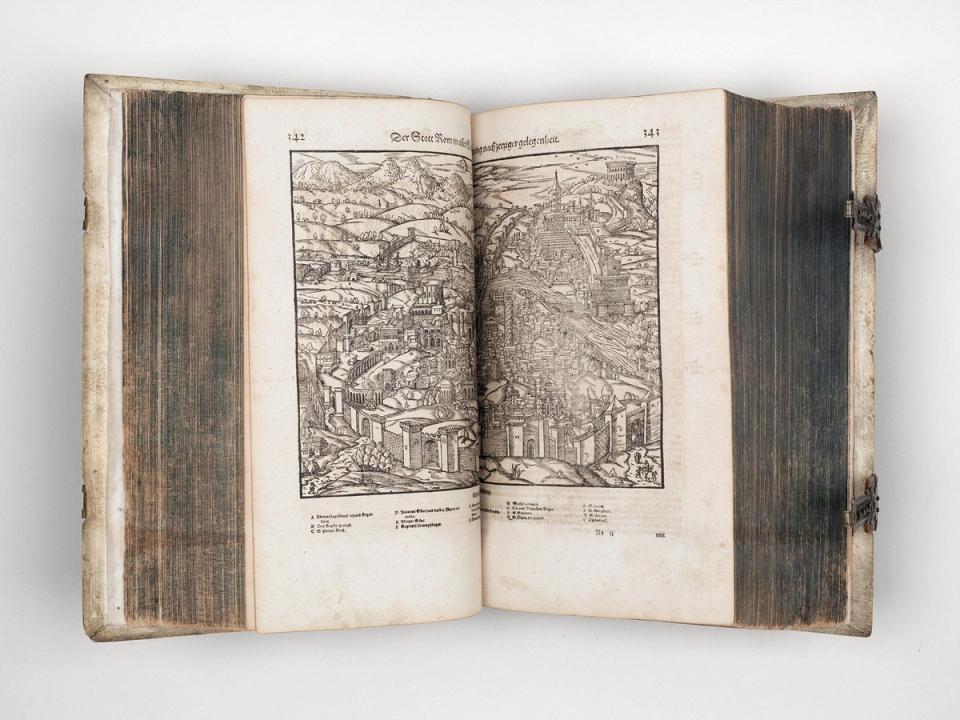
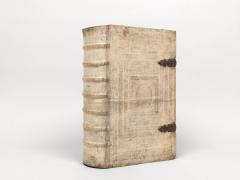
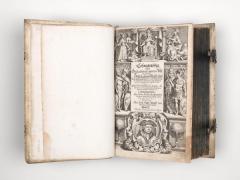
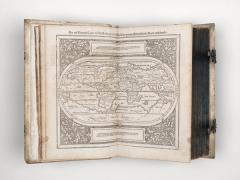
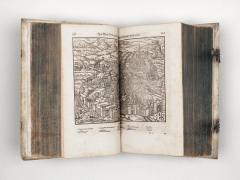
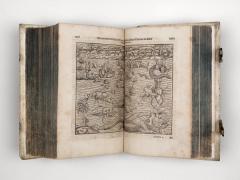
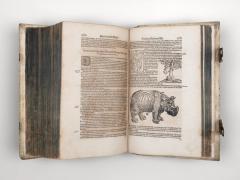
Description: Bound in contemporary pigskin over wooden boards, decorated with roll-tooled borders; 2 brass clasps and catch-plates; spine with 7 raised bands. Folio: 37 × 23 cm (sheet size); [12]ll., 52ll. (maps), 1752pp. (i.e. 1748). With 1 engraved title-page (by M. Merian), 26 double-page maps (before text), 73 double-page maps and plans in the text section (1 fold-out) and more than 1400 woodcut illustrations in text.
Condition: Binding slightly rubbed, stained and soiled, with a small tear at the headband. Endpapers renewed, front pastedown with adhesive residue of old bookplate. Inner hinges reinforced. Contents throughout somewhat browned with age. Throughout somewhat spotted and in places slightly dampstained. The engraved title page with a small tear in the lower margin (c. 1 cm, not affecting the print), the double-page map reinforced at the inner edges. Despite the described blemishes, still a well-preserved copy.
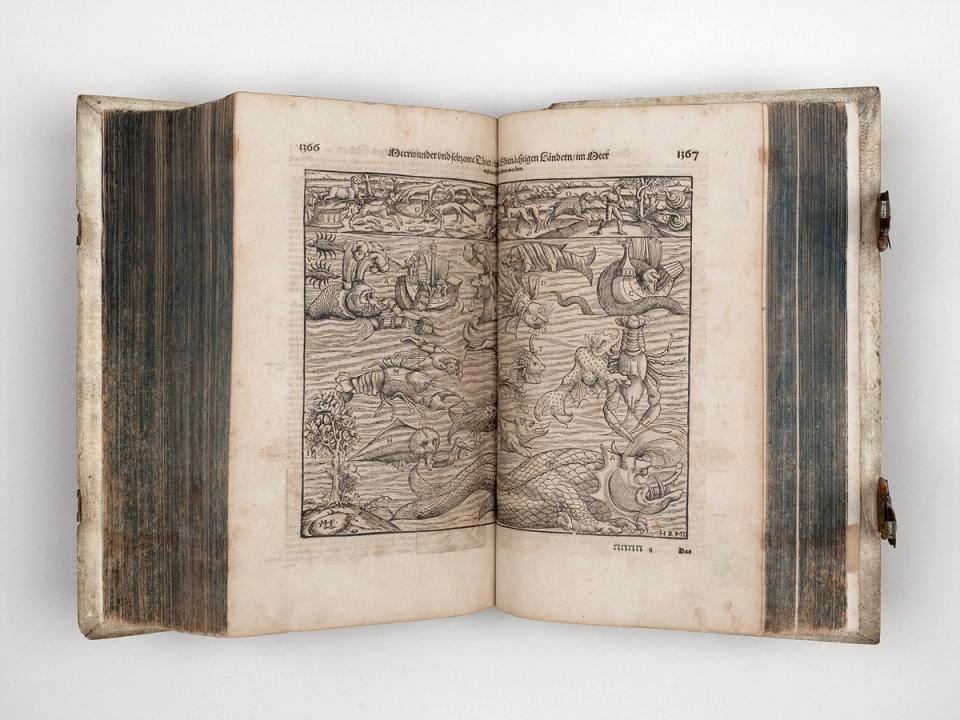
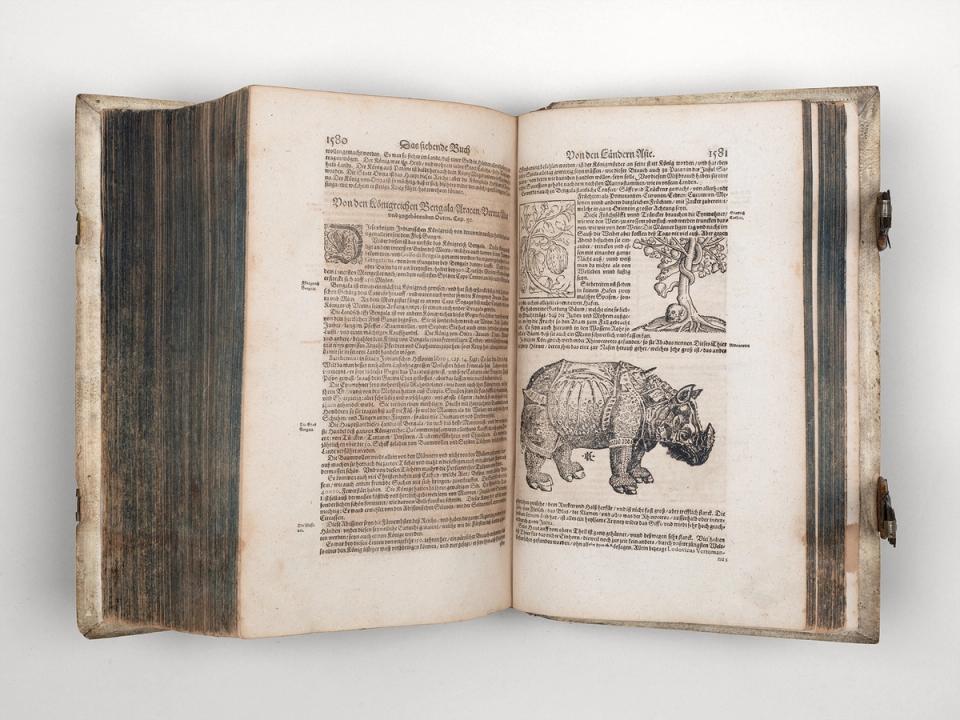
Notes: Münster’s Cosmographia was first published in 1544 and focuses primarily on the German lands, their geography, society and history. He generally drew his information from reputable scholarly sources. This is why his account is generally regarded as very accurate. In keeping with the state of knowledge at the time, other European and non-European countries are also described in detail. However, the Cosmographia also contains accounts of unicorns, dragons and other fantastical creatures, as well as mythical peoples. Whilst the first edition of 1544 contained only six realistic views – including, alongside the obligatory pilgrimage destinations of Rome and Jerusalem, the author's home towns of Ingelheim and Basel – their number increased with each subsequent edition. This latest German edition has been expanded further to include approximately 200 additional woodcuts and 25 newly drawn introductory maps. With its extensive illustrations and meticulous descriptions, the Cosmographia became the prototype for “city books” and ushered in a development in the depiction of cities that ultimately reached its zenith in Merian’s work.
---
Bibliography:
Burmeister, Karl Heinz: Sebastian Münster. Bibliographie. Guido Pressler, Wiesbaden, 1964.
VD 17: Verzeichnis der im deutschen Sprachraum erschienenen Drucke des 17. Jahrhunderts.