Malory, Sir Thomas
Le Morte Darthur. The Birth Life and Acts of King Arthur of His Noble Knights of the Round Table (…)
J.M. Dent, London, 1909
Beschreibung
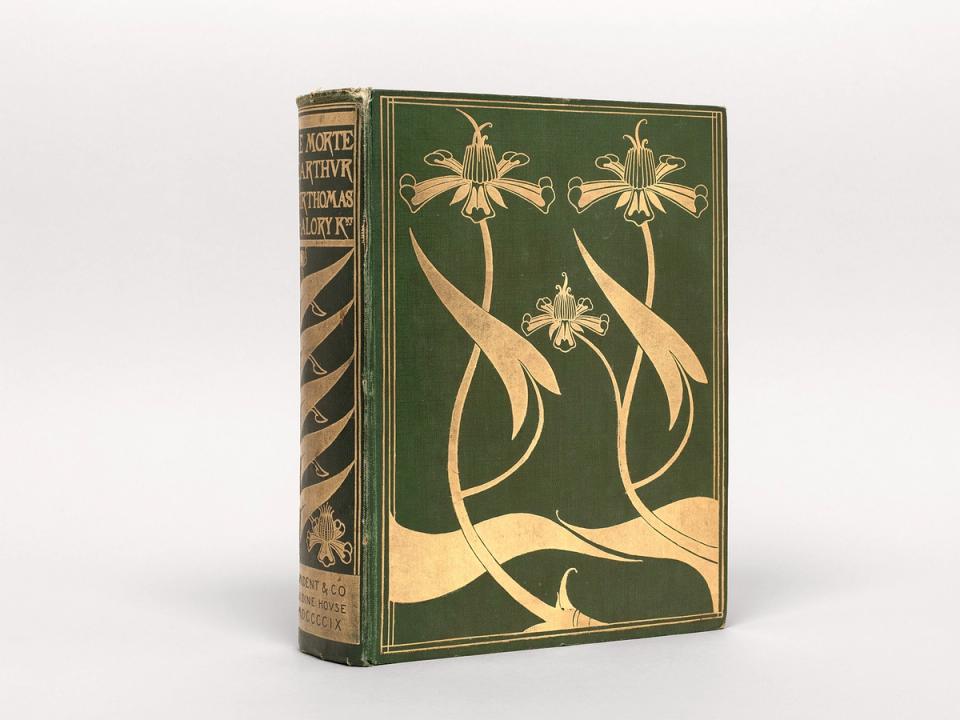
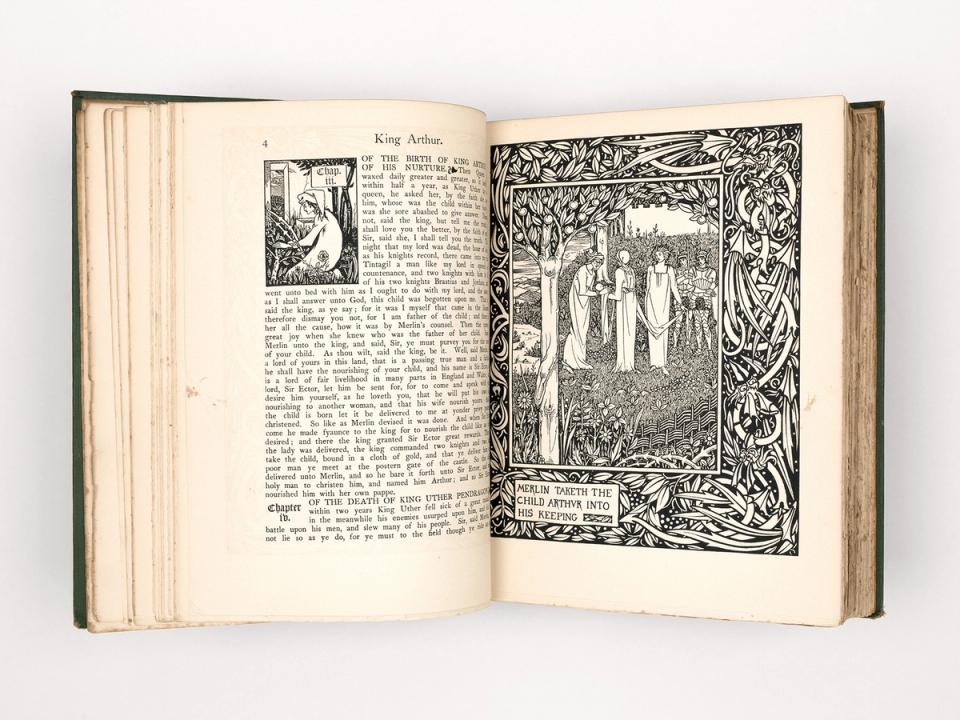
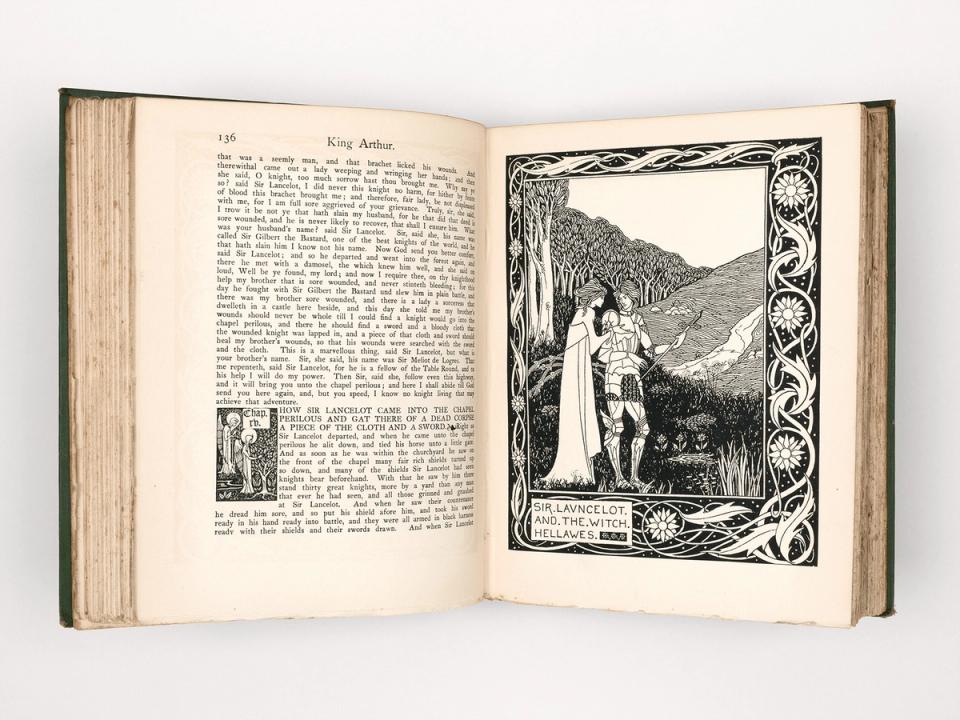
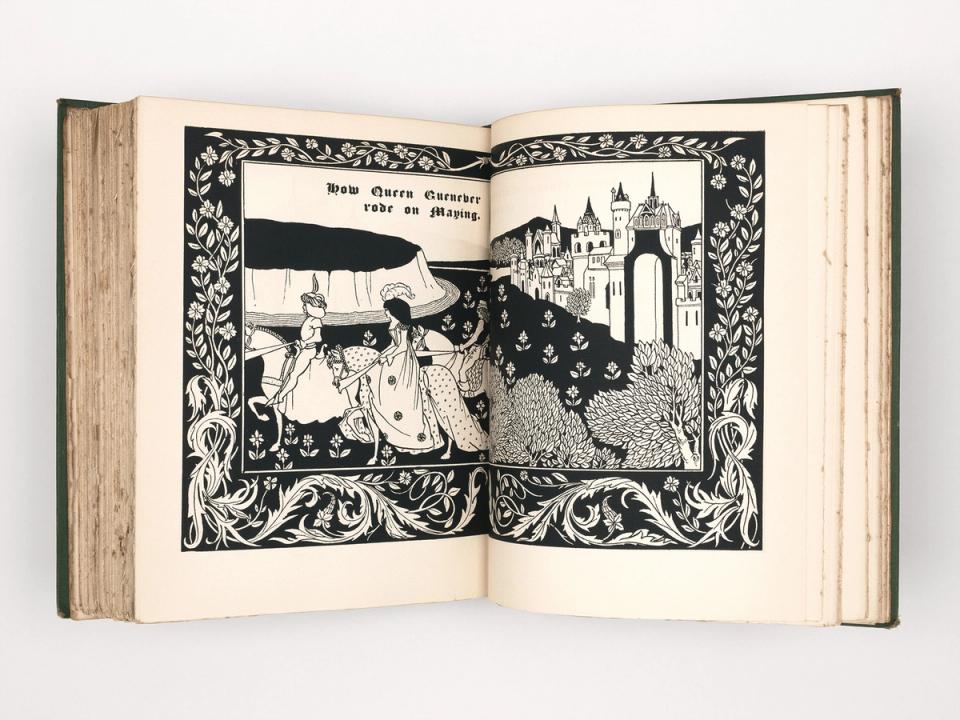
Beardsley’s Morte Darthur remains a masterpiece of beauty and elegance. One of a limited edition of 1500 copies.
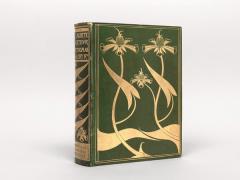
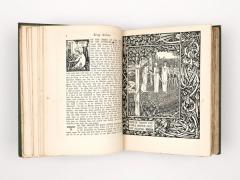
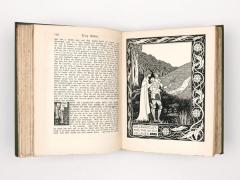
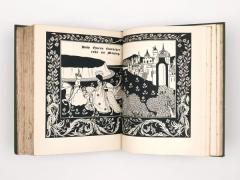
Description: Publisher’s olive‑green cloth binding stamped in gilt with an Art Nouveau design by Aubrey Beardsley on upper cover and spine, gilt title to spine. Quarto: 26 × 21 cm; pp. [7], vi-liv, 624. With a frontispiece (photogravure plate: How King Arthur Saw the Questing Beast), 20 full-page engravings (some double-page) and approx. 350 initial letters, borders, and chapter headings designed by Beardsley. Top edge gilt, others uncut.
Provenance: Ownership signature to flyleaf in an unknown hand.
Condition: Binding a bit scuffed and bruised at corners, superficial split to upper joint (c. 2cm). Endpapers somewhat tanned and spottet, front free endpapers detached. Pages slightly toned with age, some spotting to front-matter.
Notes: Joseph Malcolm Dent (1860–1928) founded his publishing house with the aim of making classical literature accessible to a wide audience in artistically high-quality editions. One of his first publications was Malory’s “Le Morte d'Arthur”, which was published between 1893 and 1894. Remarkably, he commissioned the then young and unknown Aubrey Beardsley (1872–1898) for the artistic design. Unlike the Victorian realism of the Pre-Raphaelites that was popular at the time, Beardsley’s illustration style departed radically from familiar aesthetic conventions. Rather than the static, low-contrast aesthetic typical of woodcuts, his compositions feature large areas of deep black contrasting with delicate curved lines and a flat perspective influenced by Japanese prints (ukiyo-e). His androgynous and almost grotesque depictions of people also anticipated an aesthetic that would later influence the Art Nouveau movement. This radically new visual language may explain why the first edition was not a great success. For the second edition in 1909, by which point Beardsley had been dead for eleven years, Dent drew on the large collection of printing plates and supplemented the edition with ten additional designs by Beardsley that had not been used in the first edition. The second edition consisted of 1000 copies in Great Britain, with a further 500 copies printed for E.P. Dutton in New York for the US market.